During my studies and research on science projects, I always wanted to try out models that were both practical and suitable for my abilities. One of the projects that I remember the most was making my own mini metal detector. This was not only a simple practice exercise, but also gave me many valuable experiences in creative thinking, patience and problem-solving ability.
Actually, the idea of making a mini metal detector came to me quite by chance. During a class, the teacher suggested small projects that students could do themselves, including a metal detector model. This was an easy choice, did not require too much specialized knowledge but still helped me practice important skills. Simple and practical – that’s why I started to make my own mini metal detector.
From idea on paper to practice
If you have ever gone through the security check gates at the airport, you will surely see the familiar image of metal scanners. They are used to check passengers, ensuring flight safety. I’m always curious: “What’s so special inside those machines that can detect metal so quickly?”.
From that curiosity, I wanted to create a compact, simple model that still retains the basic principles of real scanners. This is also a way for me to learn more about the technology that I often come into contact with in my daily life but rarely pay attention to. Of course, with a project that I did myself for the first time, I couldn’t start completely from zero. I referred to the operating principles of airport metal scanners, then shortened and adjusted them to suit my actual conditions.
A basic metal detector works based on the change of magnetic field when metal passes through. I couldn’t build a machine as complex as the real one, but based on the basic principles, I created a mini version that can detect small metal objects such as keys and coins. This not only helped me understand the operating mechanism better, but also allowed me to apply the theory I learned into practice.
A special experience when doing it alone
Unlike other group projects, this time I chose to work alone. This brought me both advantages and disadvantages. The advantage is that I have full authority to decide how to do it, the progress and the direction of the project. But the difficulty lies in the fact that I have to solve all the problems that arise by myself, from preparing materials to assembling and testing.
I started this project in my free time after school. The afternoons sitting meticulously connecting wires, soldering circuits, and testing every little detail made me both excited and sometimes a bit discouraged. But because I worked alone, I learned to be more persistent, as well as how to plan and organize my work properly.
During the manufacturing process, not everything went smoothly. One of the biggest difficulties I encountered was the lack of necessary tools. I did not have some electronic components, especially measuring devices. At first, I felt quite worried because I thought the project might have to stop. However, instead of giving up, I found a solution. I boldly borrowed more tools from my instructor. Luckily, he was very enthusiastic in supporting me, helping me have enough materials to continue. The lesson I learned here is: difficulties can always appear unexpectedly, but if you know how to seek help at the right time, you can completely overcome them.
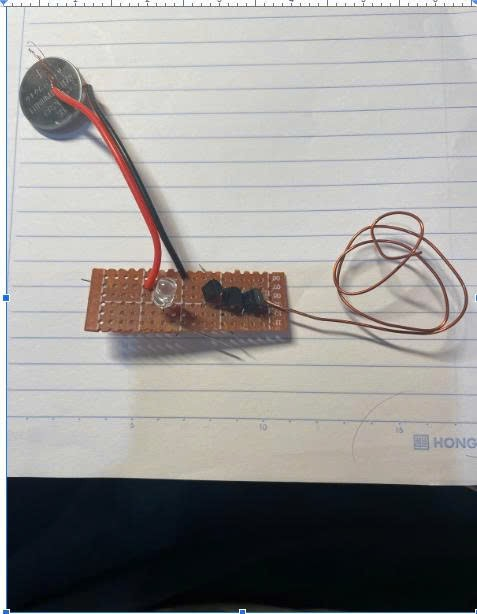
After a period of effort, my mini metal detector was finally completed. Although it is only a small version, the accuracy is not as high as professional machines, but it can still detect small metal objects, true to the original goal I set.
More importantly, through this project, I learned:
+How to apply theoretical knowledge into practice.
+Skills of self-study, exploration and creativity.
+Lessons about patience, not giving up when facing difficulties.
+Know how to appreciate the help from teachers, and learn how to proactively find solutions.
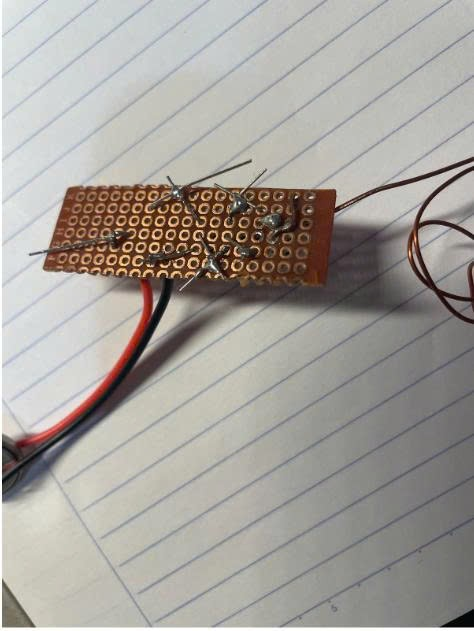
The project of making a mini metal detector, although small, brought me many valuable experiences. It helped me understand that science is not far away, but can start from the simplest models. More importantly, I learned to be more confident in my abilities, and believe that if I persevered, I could do more.
You can read more about my metal detector project here: https://docs.google.com/document/d/15GWCdeDcFMbhrhTdFZv39ryqtSxghOM-kmNfxxyL4Q4/edit?tab=t.0
Leave a Reply